School of Medicine Students Champion Climate-Conscious Care
(April 22, 2026) — For medical students, understanding a patient’s health increasingly means understanding their surroundings.
At the Georgetown School of Medicine, students involved with the Environmental Health and Medicine longitudinal academic track are working to redefine how future physicians are trained by embedding climate and environmental health into clinical education. This effort aims to better prepare doctors for the impact that a changing climate can have on their patients.
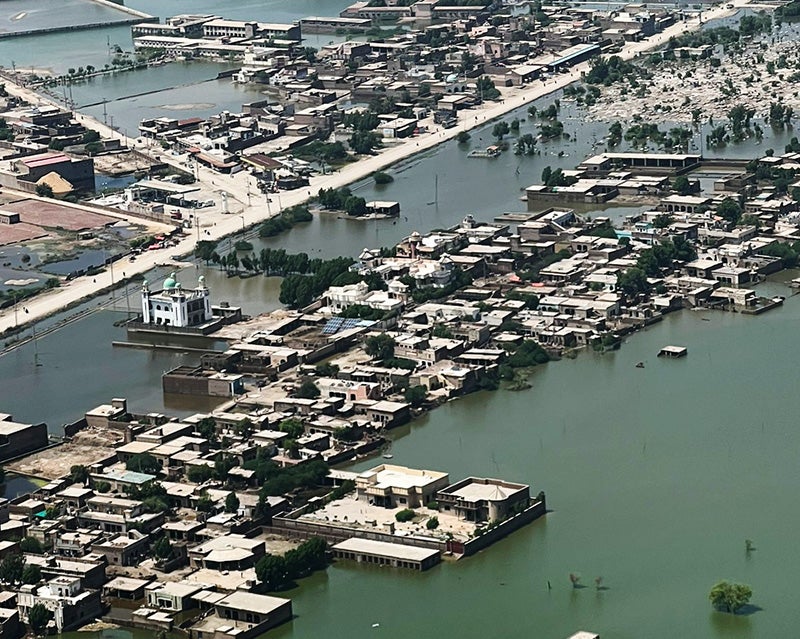
The family of student Yusra Rafeeqi (M’27) was affected by the 2022 flooding in Pakistan, pictured here, which motivated her to join the Environmental Health and Medicine Track. (Image: Ali Hyder Junejo, Wikipedia, used under the CC BY 2.0 license)
“I grew up reading in the news about the environment and felt a sense of powerlessness,” says Elena Iliadis (M’27). “I always felt there was nothing you could do. Finally, I found the opportunity to take medicine, my passion, and combine it with a cause I care deeply about.”
For Iliadis and many in her cohort, including Yusra Rafeeqi (M’27), their motivation to join the initiative is deeply personal.
“My family was affected by the 2022 flooding in Pakistan,” says Rafeeqi. “It got me into understanding how environmental health inequities impact disadvantaged populations both in the U.S. and abroad.”
From Personal Experience to Collective Action
The optional longitudinal academic track, taken alongside the medical education journey and overseen by faculty advisor Caroline Wellbery, MD, PhD, aims to integrate climate change and sustainability topics directly into the medical school experience. The first two years of the track feature foundational lectures on climate and health, while the last two years focus on a research and advocacy project chosen by the students.
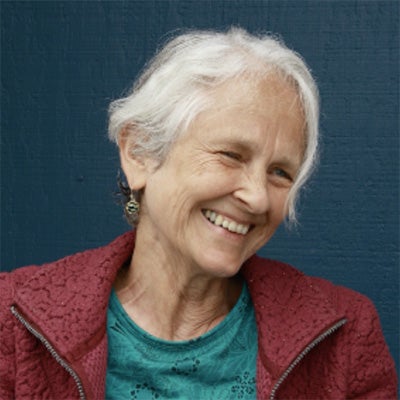
Caroline Wellbery, MD, PhD
Wellbery emphasizes that the program’s strength lies in its student-driven nature. “The track gives a structure with a lot of flexibility,” she says. “Climate change is so big, it’s hard to wrap your head around. But students can work on things like reducing healthcare’s carbon footprint and finding smaller, tangible ways to make differences.” According to Wellbery, the healthcare system globally contributes about 4.5% of greenhouse gas emissions. In fact, if healthcare were a country, it would be the fifth-largest emitter worldwide.
“Environmental health isn’t abstract; it shows up in our patients every day,” said Kriti Shrestha (M’27). “What’s exciting is that even small, intentional changes to existing training can help us better recognize and address the environmental exposures that disproportionately affect vulnerable communities.”
Finding Ways to Make an Impact
One of the group’s most significant undertakings is the Planetary Health Report Card, a metric-based tool that aims to evaluate health professional schools on five metrics: curriculum; interdisciplinary research in health and environment; community outreach and advocacy; support for student-led initiatives; and campus sustainability. It is used by medical schools globally to track sustainability efforts on their campuses and in hospitals.
“The planetary health report card was one of our first major initiatives. The gaps it highlighted revealed key areas for growth and a guide for a more intentional approach to start integrating environmental health into the curriculum,” said Shrestha.
The tool also revealed opportunities for improvement at the School of Medicine and MedStar Georgetown University Hospital.
“This information can act as a catalyst for increasing our health care system’s sustainability,” Iliadis says. “We think medicine is not just about patient care, it’s also about the hospital system’s footprint. We are using this report to advocate for change to increase sustainability efforts.”
Bringing Climate Into the Clinic
Third-year medical students in the track are also advocating for more integration of climate topics into the clinical curriculum so that all students, not just those involved with the track, can be exposed to environmental health topics. They also are in the process of collaborating with Medical Students for a Sustainable Future (MS4SF), a nationwide student-led organization, to support more sustainability initiatives and create a more environmentally conscious community.
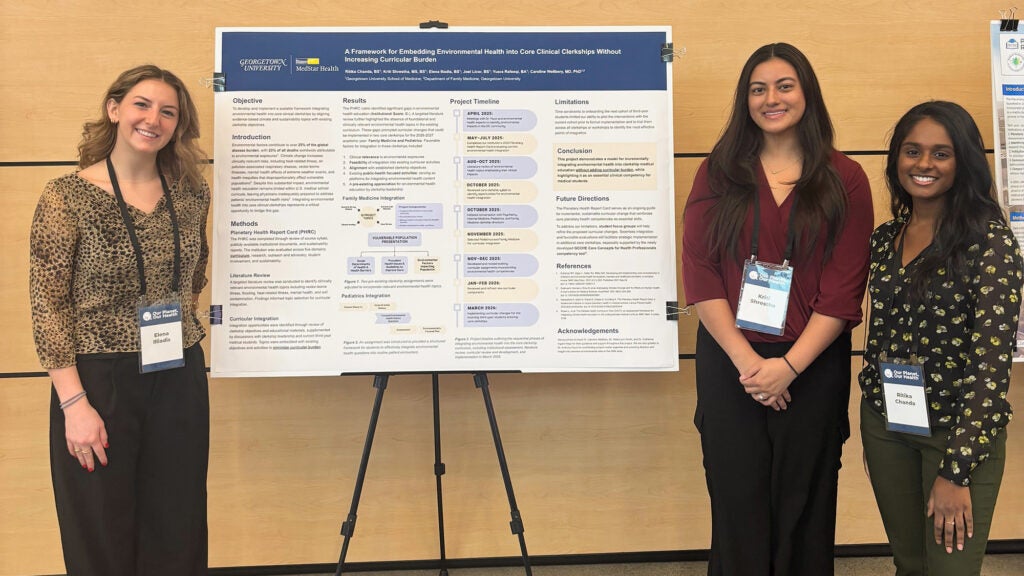
From right: Ritika Chanda (M’27), Kriti Shrestha (M’27) and Elena Iliadis (M’27) presented the results of their curriculum integration work at the Medical Students for a Sustainable Future (MS4SF) Climate Health Equity Day 2026.
“This is the ideal time to explore and push our boundaries,” says Ritika Chanda (M’27). “As medical students, we are sponges. Later in training, we’re expected to just apply what we’ve learned. Right now, we have the freedom to innovate and think broadly.”
Rather than adding extra classes to an already-packed schedule, the students are working with clerkship leaders to add environmental considerations to existing assignments.
“We didn’t want to add a burden,” says Chanda. “We worked to modify assignments in pediatrics and family medicine. For example, in a history-taking assignment, we’re adding screening questions: Does the patient live next to a major roadway? Are there trash disposal sites nearby? Is there mold in the home?”
Chanda, who suffered from respiratory issues after moving to Washington, D.C., discovered that mold in her apartment was the trigger. “Many doctors don’t spend much time asking about triggers,” she says. “We want to minimize those triggers before we just add another medication.”
“Our work is the embodiment of cura personalis,” said Joel Licor (M’27). “We cannot claim to care for our patients if we ignore the conditions that may shape their suffering. It is our duty to confront climate and environmental harm as it affects both the body and mind, and ultimately the spirit of our patients. By doing so we are healing indirectly with compassion, justice, and responsibility for our community.”
Heather Wilpone-Welborn
GUMC Communications
The Environmental Health and Medicine Track is open to incoming M1 students looking to combine clinical excellence with environmental advocacy.
Top Image: LightFieldStudios / iStock / Getty Images Plus