GEP Opens Doors to Opportunities in Medicine for Local High School Students
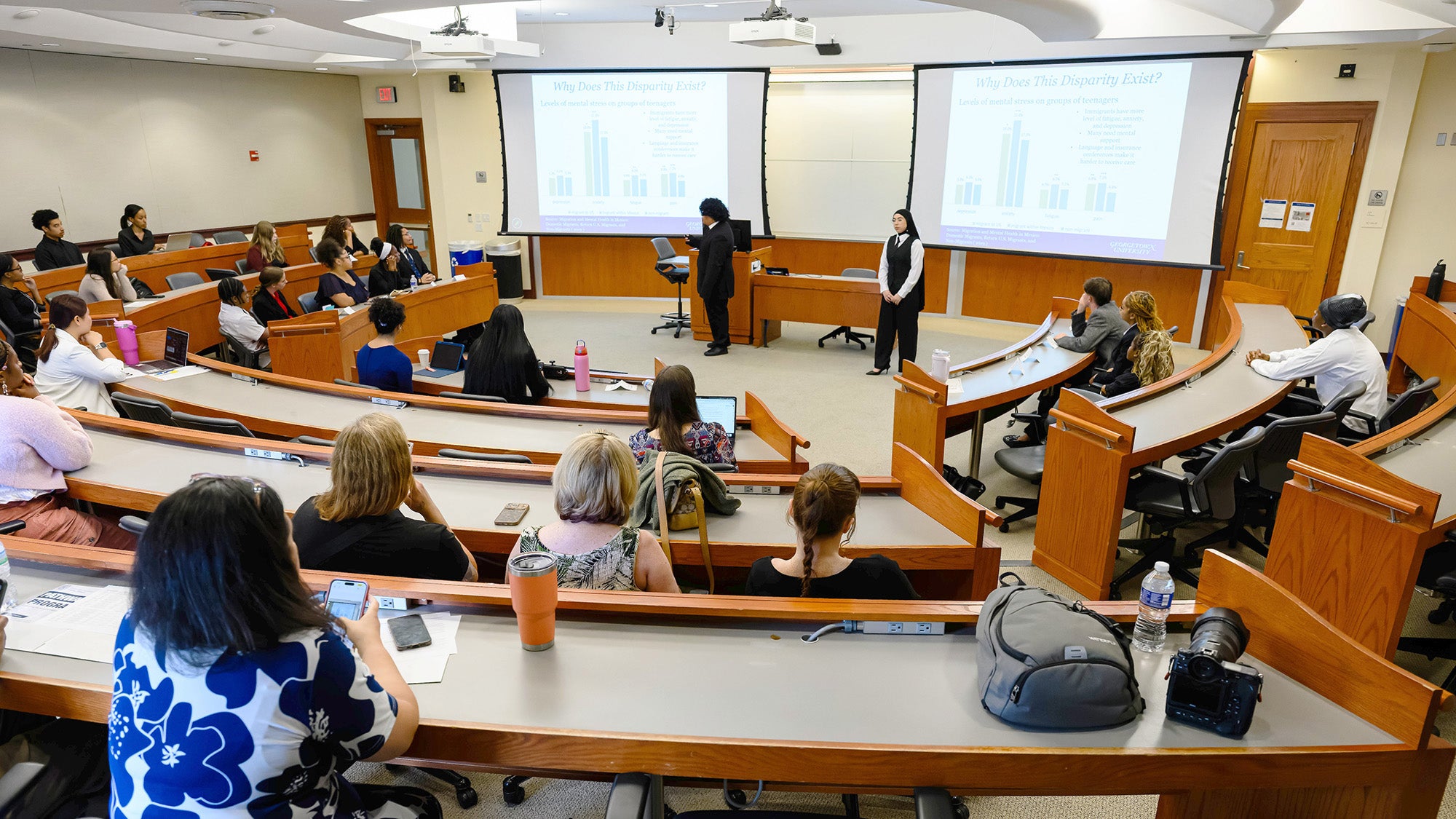
(August 17, 2026) — In between faculty-led lectures and presentations, clinical shadowing, field trips to local museums and research facilities, and connecting with mentors, the participants in the School of Medicine’s 2026 Gateway Exploration Program (GEP) performed health equity research and proposed solutions to challenges affecting people in their communities and beyond.
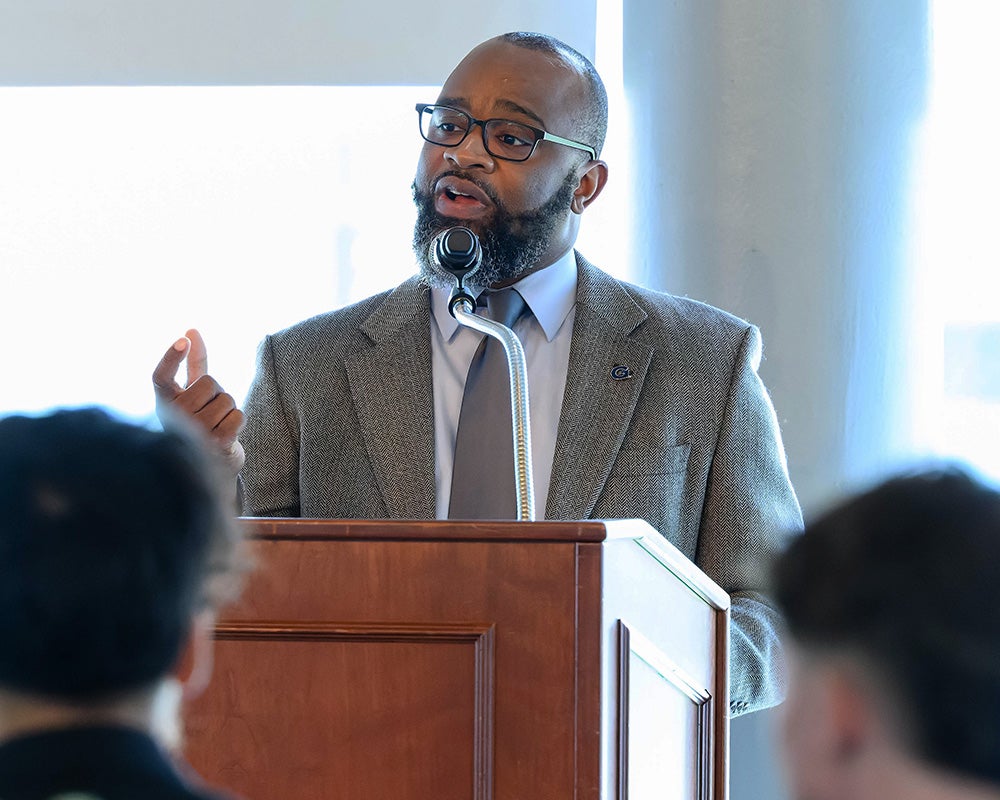
Khaseem Davis, PhD
“I always tell our students they embody excellence, and that was on full display this summer,” said Khaseem Davis, PhD, senior associate dean of diversity, equity, inclusion and belonging at the School of Medicine. “GEP has so much room to grow, and our goal is to reach even more youth across this region with this program.”
Historically, GEP scholars have come from public high schools in the District of Columbia. For the first time this year, they were joined by students from public high schools in Prince William County, Virginia.
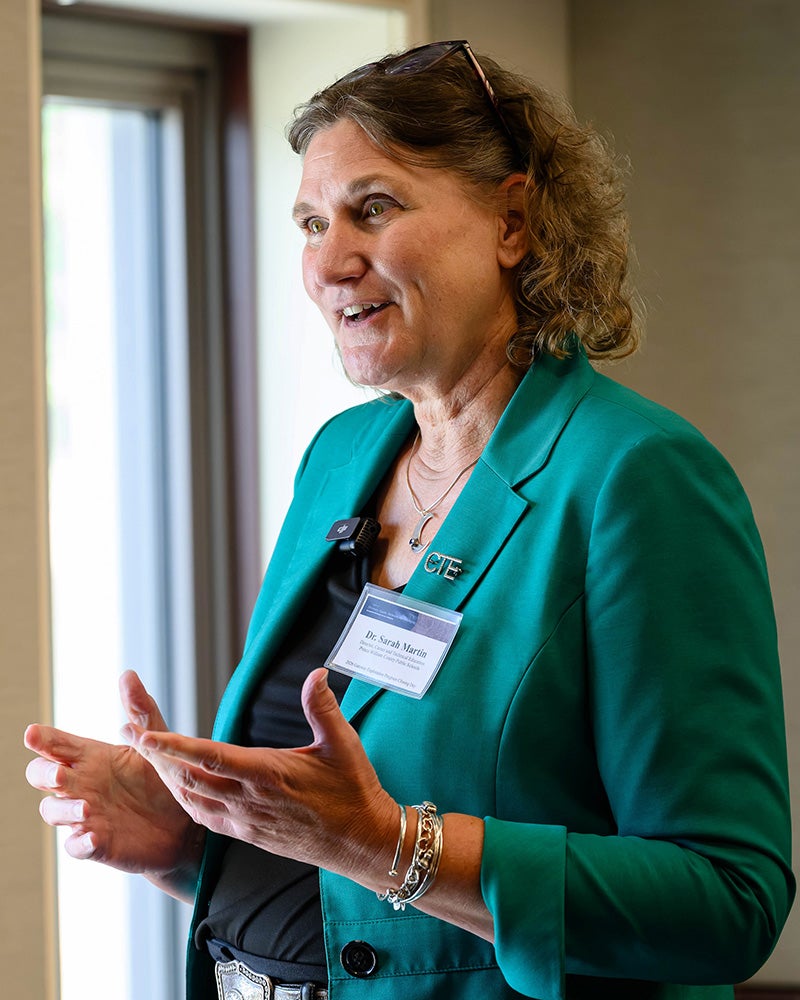
Sarah Martin, PhD
“The impact of this experience will extend far beyond these six weeks, and I know our students will carry the lessons, relationships, and inspiration gained through GEP for years to come,” said Sarah Martin, PhD, director of career and technical education for PWCS.
“Talking to our students, you could see this experience gave them more than research, clinical shadowing and mentoring,” Davis said. “It gave them a way to reach across cultures and geographic lines, and form connections they’ll carry with them into college and whatever comes next.”
Presentations with Personal Connections
During an introduction to health disparities in the GEP scholars’ first week, they discussed potential subjects and formed two-person teams to present their final research at the end of the program. Their topics included differences in life expectancy for patients with Type 2 diabetes in different Washington, D.C., neighborhoods, comparing athletes’ access to sports medicine in the D.C. area to developing countries in the Middle East, and the relationship between poverty and pain management for D.C.- area residents.
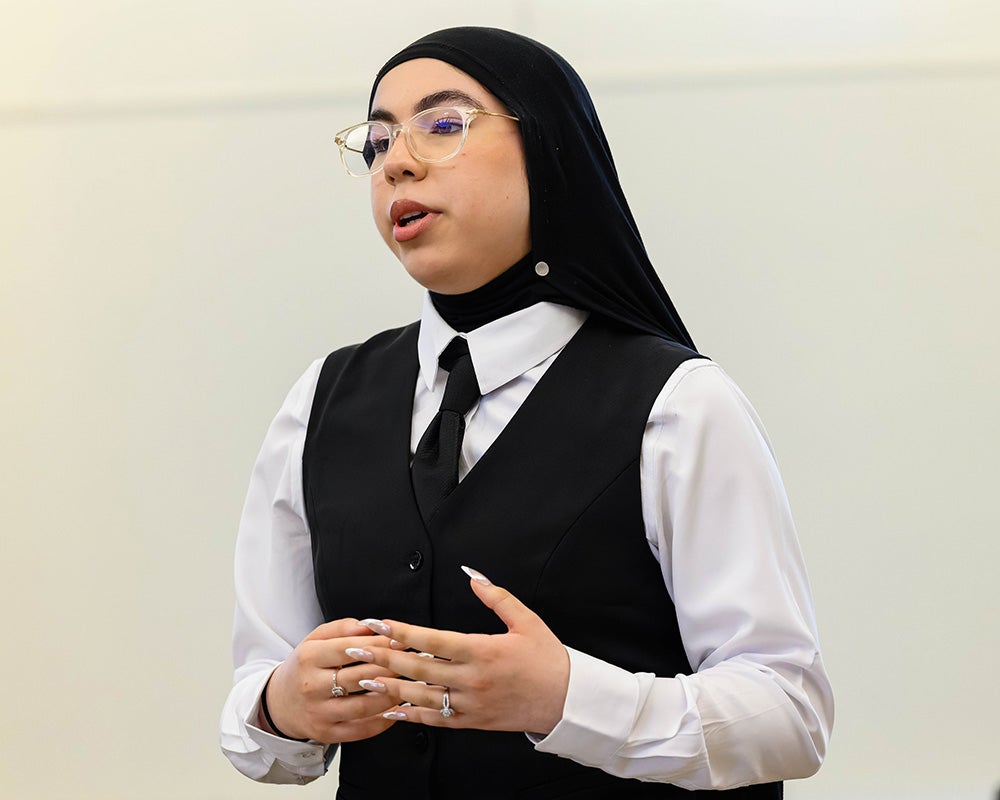
Rama El-Munawwar
The students gave their presentations on July 31 in the Hariri Building before the GEP closing ceremony. In each presentation, the scholars started by explaining their interest in the topic. At the beginning of a presentation titled “How Do Cultural Adjustment and Social Pressure Affect the Mental Health of Immigrant Teenagers in the United States Compared to Non-Immigrant Teenagers?,” Rama El-Munawwar, a rising senior at Osbourn Park High School in Manassas, Virginia, explained her perspective.
“I was born in the U.S., but I grew up in another country and I came back like three years ago,” El-Munawwar said. “So that made me face the unique challenges that immigrant teenagers could face. That inspired me to do research on their mental health to see how these unique challenges could affect them.”
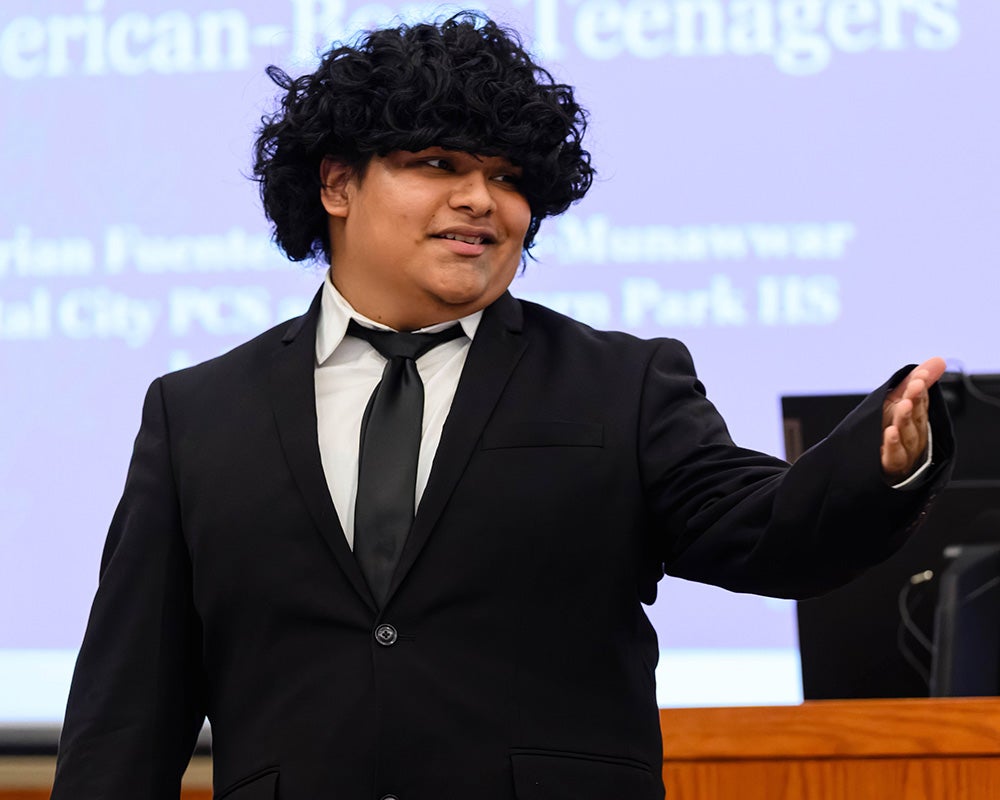
Brian Fuentes
Growing up in a neighborhood with a lot of immigrant families prompted Brian Fuentes, a rising senior at Capital City Public Charter School in Washington, D.C., to partner with El-Munawwar for their presentation. “I saw the challenges they went through when accessing mental healthcare specifically, which also inspired me to help improve mental healthcare access for my community,” he said.
School-based mental health services and community clinics offer accessible care for immigrant teenagers, El-Munawwar said. She and Fuentes suggested using mobile care clinics and partnering with the DC Healthcare Alliance to make mental healthcare more accessible.
As a D.C. native, Leo Stitziel chose to learn more about food insecurity in his community by working on a presentation titled “To What Extent Do Food Deserts Contribute to the Increased Prevalence of Type 2 Diabetes and Obesity Among Low-Income Urban Populations in Wards 7 & 8 in Washington, D.C.?”
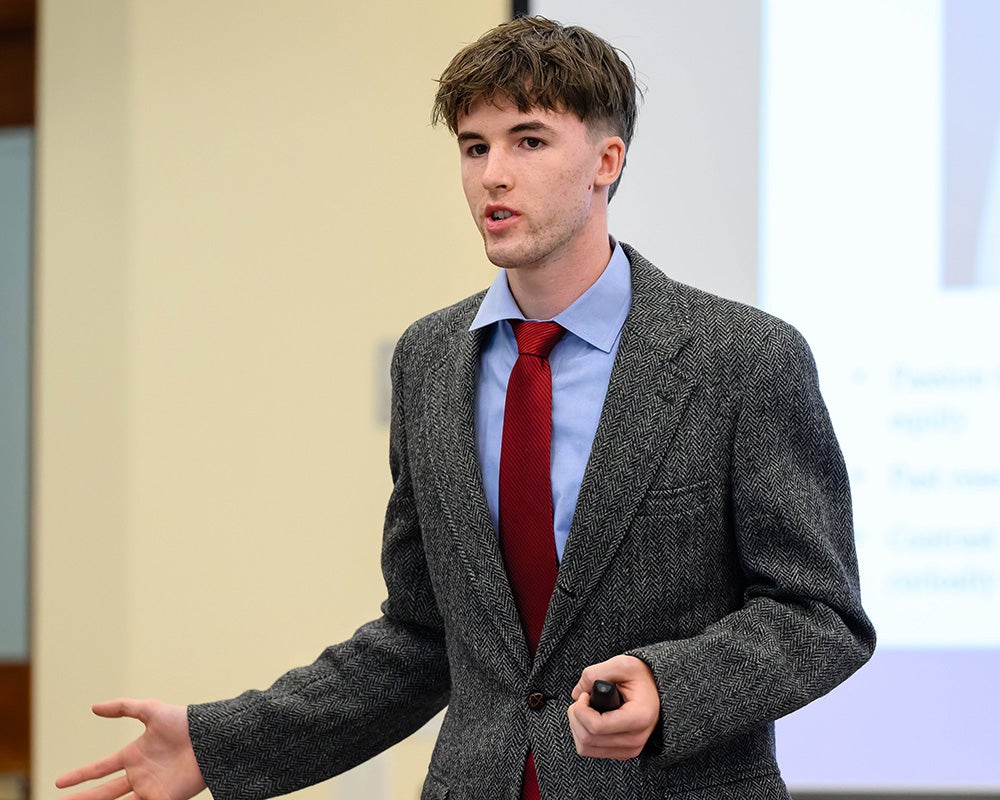
Leo Stitziel
“I’ve lived here all my life, and this has led me to develop a true love for the city and the people in it,” said Stitziel, a rising senior at Jackson-Reed High School in Washington, D.C.
Stitziel also mentioned a personal interest in the subject. “What’s really led me to focus on this project is that my dad grew up without food security, and he worked really hard so that I can have food security,” he said. “So this made me just really want to use everything I have to give back.”
Adonia Ermias, a rising senior at Osbourn Park High School, was motivated to research the topic by her interest in public health and healthy equity. “Me living in an area where normally we don’t necessarily have to worry about accessing grocery stores because of how close by they are, I think the contrasting perspective that I have really made me value the topic more and gave me a lot more to learn about,” she said.
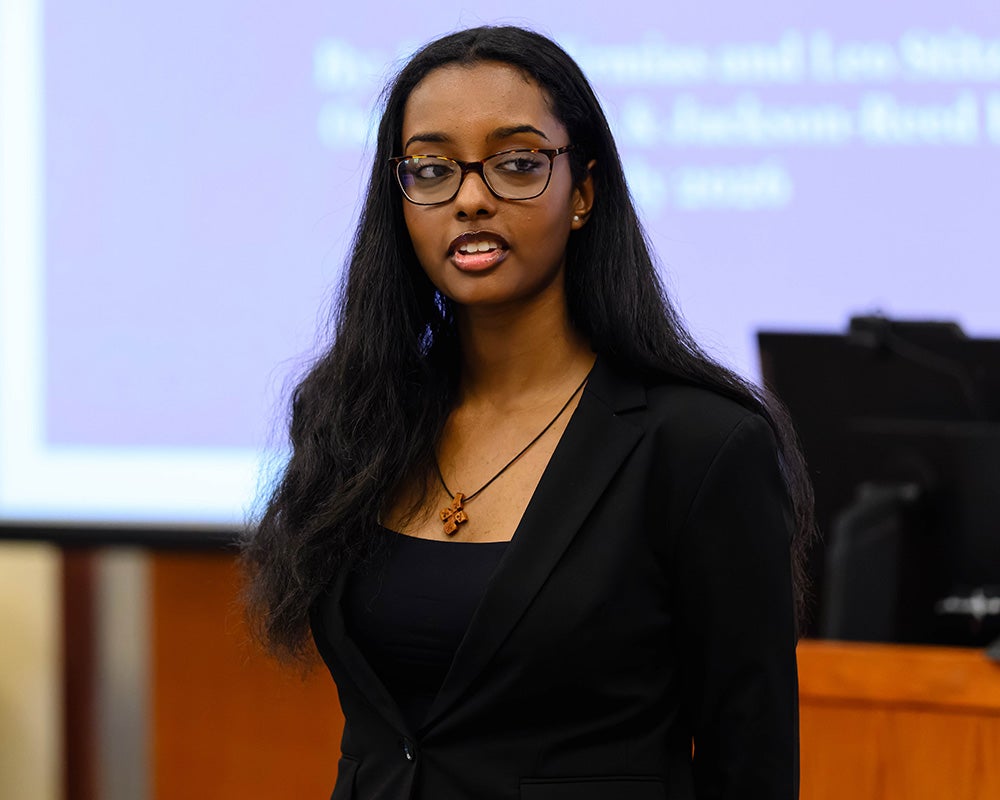
Adonia Ermias
Residents in Wards 7 and 8 have the highest rates of obesity and diabetes in D.C. and few options for grocery shopping. “Only 11% of D.C.’s area is actually classified as a food desert, but 82% of these food deserts are located in Wards 7 and 8,” Stitziel said.
Increasing the availability of grocery delivery services and reducing zoning barriers to farmers’ markets can help alleviate the lack of access to grocery stores in Wards 7 and 8, Stitziel and Ermias said.
‘Thank You For Believing In Our Futures’
Reflecting on their experiences, the GEP scholars shared what they learned about medicine and healthcare during the closing ceremony.
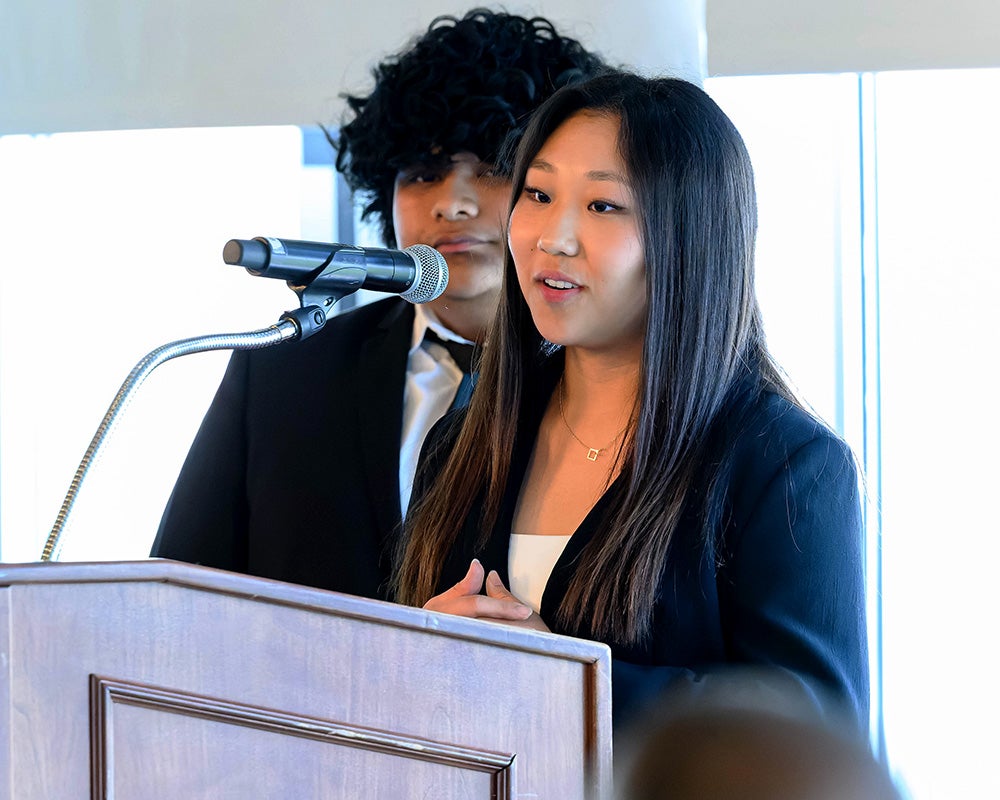
Christine Park and Brian Fuentes
“Whether we were hearing physicians share their journeys or visiting organizations that serve communities every day, each experience reminded us that healthcare extends far beyond the walls of a hospital,” said Christine Park, a rising senior at Gainesville High School in Gainesville, Virginia. “At its core, healthcare is built on empathy, trust and a genuine commitment to improving the lives of others.”
While the GEP scholars expected to spend their summer learning about careers in medicine and healthcare, they were surprised by how close they felt to one another at the end of the program.
“On my first day here, I didn’t expect I was going to come to know new people and speak with all of you,” Fuentes said. “I thought I was just going to come here for the program. But it turns out, we made a whole bunch of meaningful friendships that I think are going to last us for a long time.”
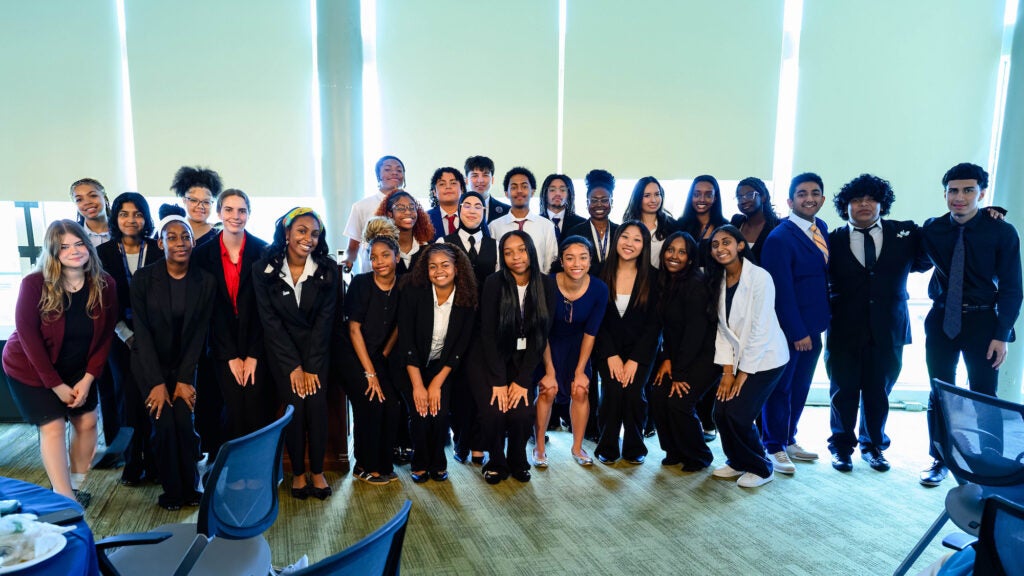
The 2026 GEP scholars
The GEP scholars expressed their gratitude for the program’s leadership, including Davis, Samantha McLaughlin and Simone Stanley, as well as the program associates, mentors, physicians and guest speakers.
“Thank you for believing in our futures and investing in us,” Fuentes said. “Thank you for sharing your knowledge, encouragement, encouraging our curiosity, patiently awaiting our countless questions, and creating an environment where we felt inspired to learn and grow every single day. Your guidance has left an impact that will stay with us long after GEP.”
Kat Zambon
GUMC Communications
Top Image: GEP scholars Rama El-Munawwar and Brian Fuentes presented their research project, “How Do Cultural Adjustment and Social Pressure Affect the Mental Health of Immigrant Teenagers in the United States Compared to Non-Immigrant Teenagers?”