Where Medicine Meets Mission: Medical Students Build Clinical Skills in the Dominican Republic
(August 7, 2026) — When eight Georgetown University School of Medicine students boarded a plane for the Dominican Republic this summer, they expected to sharpen their clinical skills. They returned with something far more lasting: a new understanding of what it means to care for patients when resources are scarce, barriers to care are immense, and relationships matter as much as medicine.
As part of Georgetown’s partnership with Mission ILAC (Institute for Latin American Concern), students spent a month working alongside Dominican physicians in rural communities throughout the country. During the program, students transformed churches, schools and community centers into temporary primary care clinics, providing medical care while learning firsthand about the realities of practicing medicine in underresourced communities.
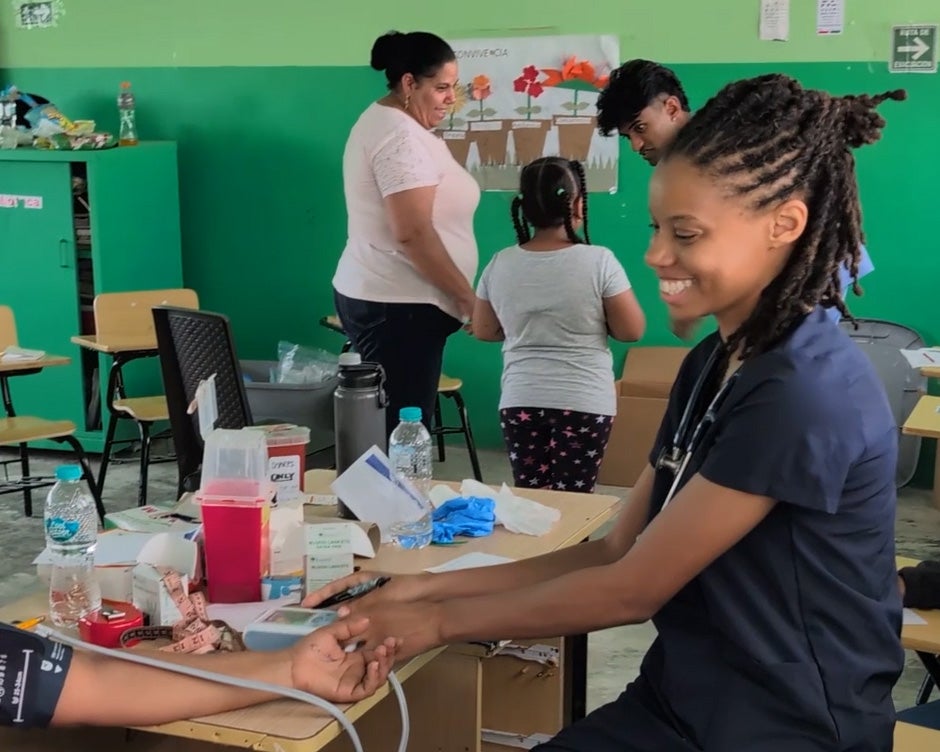
Katrina Hodges (G’25, M’29) took a patient’s blood pressure
For Katrina Hodges (G’25, M’29), a Georgetown Experiential Medical Studies Program (GEMS) alumna, Mission ILAC embodied the values that first drew her to the university.
“Georgetown says what it’s about,” she said. “The School of Medicine poured into me through GEMS, and Mission ILAC was another example of living out cura personalis, by not just talking about serving others, but actually doing it.”
The experience has been the highlight of Hodges’ medical journey so far and reinforced what kind of physician she hopes to become.
“Medicine is about more than knowing the science,” said Hodges. “It’s about being creative, being humble and being willing to serve people wherever they are. That’s what I learned in the Dominican Republic, and that’s something I’ll carry with me throughout my career.”
Creating a Clinic From Scratch
For the rising second-year medical students, the experience marked the first time they applied what they had learned during their first year of medical school to real patients.
“Everything we had learned during our first year, from infectious diseases to reproductive health, started coming together to apply what we’d learned in class,” said Hodges.
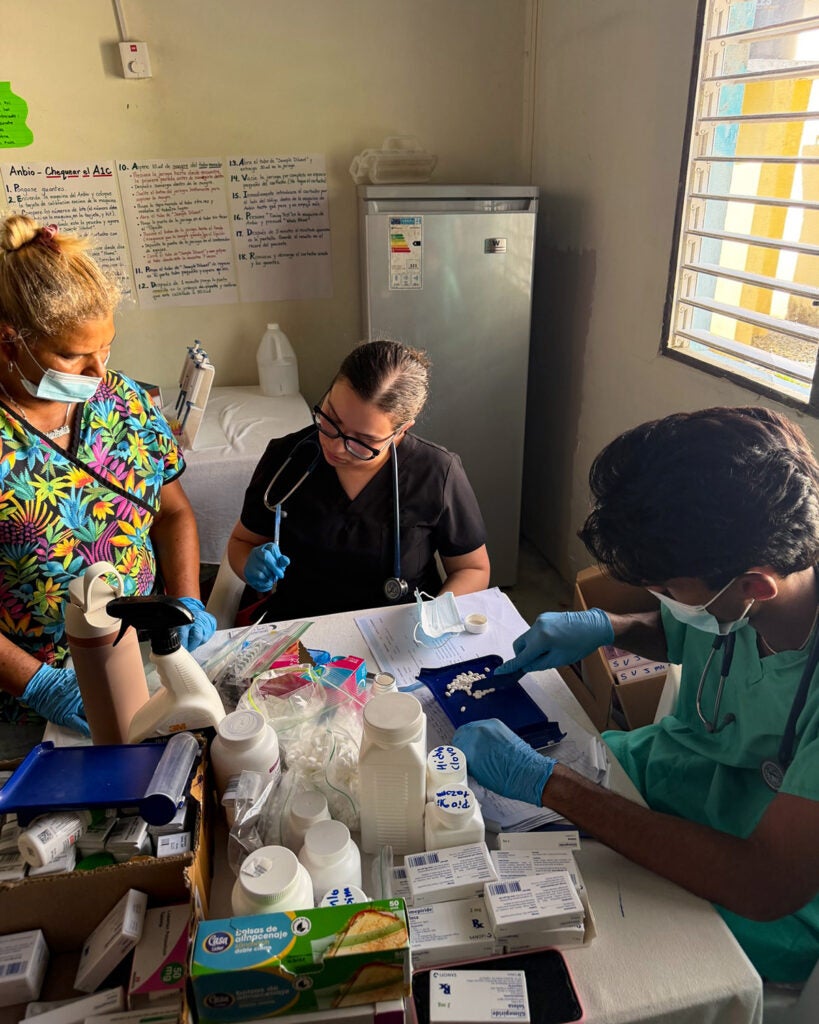
(From l) A Dominican medical staffer worked with Halyn Orellana (H’22, G’25, M’29) and Aakash Bhegade (M’29.
Working with Dominican physicians, the students performed physical examinations and were encouraged to take ownership of patient encounters while receiving close mentorship.
“We weren’t just shadowing,” said Halyn Orellana (H’22, G’25, M’29), a fellow GEMS alum. “We were asking patients questions, performing physical exams, thinking through diagnoses, presenting our plans and getting feedback. It was incredible preparation before clinical rotations.”
Students worked long days in the clinic and saw hundreds of patients over the course of the month. Each temporary clinic required a remarkable amount of ingenuity to set up, with classrooms divided into examination rooms, massage tables repurposed as exam tables, and portable equipment creating fully functioning primary care clinics.
For Aakash Bhegade (M’29), the experience brought his first year of medical school to life.
“I remember listening to a patient’s heart and thinking, ‘I think I hear a murmur,'” Bhegade said. “I asked one of the physicians to listen, and they confirmed it. It was one of those moments where something I’d only learned about in lectures suddenly became real. Seeing it play out in an actual patient was incredible.”
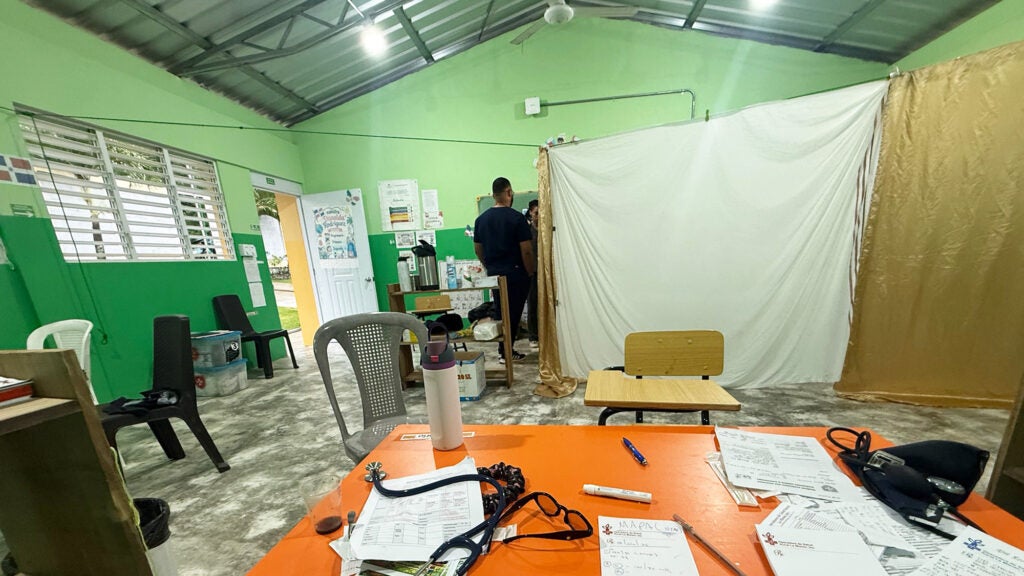
Each temporary clinic required a remarkable amount of ingenuity to set up in order to accommodate patients.
Seeing Health Disparities Up Close
Throughout the month, students encountered patients who often traveled hours to receive medical care. Most patients did not have access to regular primary care, and their exams with the medical students could be one of a handful of times they received care in their lifetimes.
William Cheong (H’29) recalled one memorable encounter with an 80-year-old man receiving his first eye examination.
“I was surprised by how many people had never had a vision exam in their lives,” he said. “Something as simple as giving someone reading glasses allowed them to see clearly again. It seems like such a small thing, but it made a huge difference in their quality of life.”
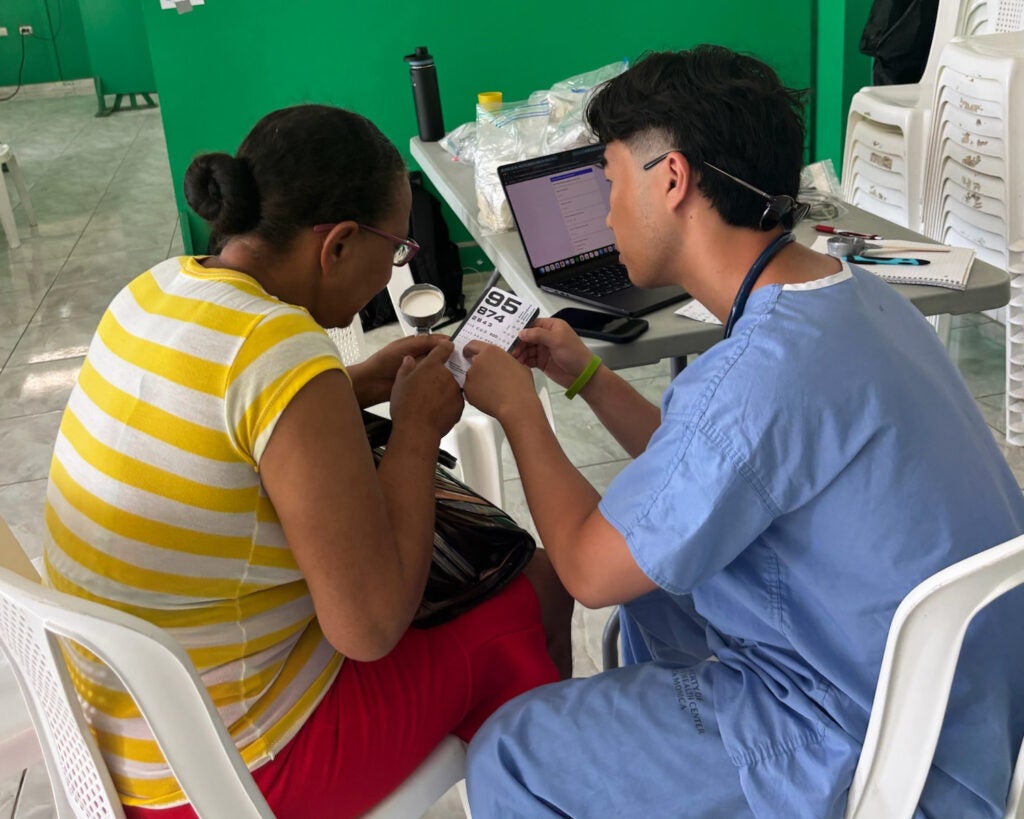
William Cheong (H’29) administered an eye exam
Cheong and Bhegade, both interested in ophthalmology, organized vision screenings that evaluated more than 200 patients. Using donated reading glasses and sunglasses, they helped address vision problems while educating patients about preventing eye disease caused by prolonged ultraviolet exposure.
With limited ophthalmic screening tools available in the clinics, they improvised to complete the exams. The students fashioned their own occluders using paper cups, tongue depressors and duct tape.
“It was incredibly rudimentary,” Bhegade said. “But it worked. We used what we had.”
The experience also revealed the limitations of what even dedicated volunteers could accomplish. Students identified patients with advanced cataracts and other vision-threatening diseases that required surgery unavailable in the communities they served.
“It was difficult to know that many of these conditions are easily treatable,” Cheong said. “The challenge was access, which left many patients unable to obtain the surgery or other care they needed.”
The Human Side of Medicine
Beyond clinical medicine, students found themselves confronting the social and economic realities shaping patients’ lives. Several clinics served communities near the Haitian border, where undocumented migrants often delayed seeking medical care out of fear of deportation.
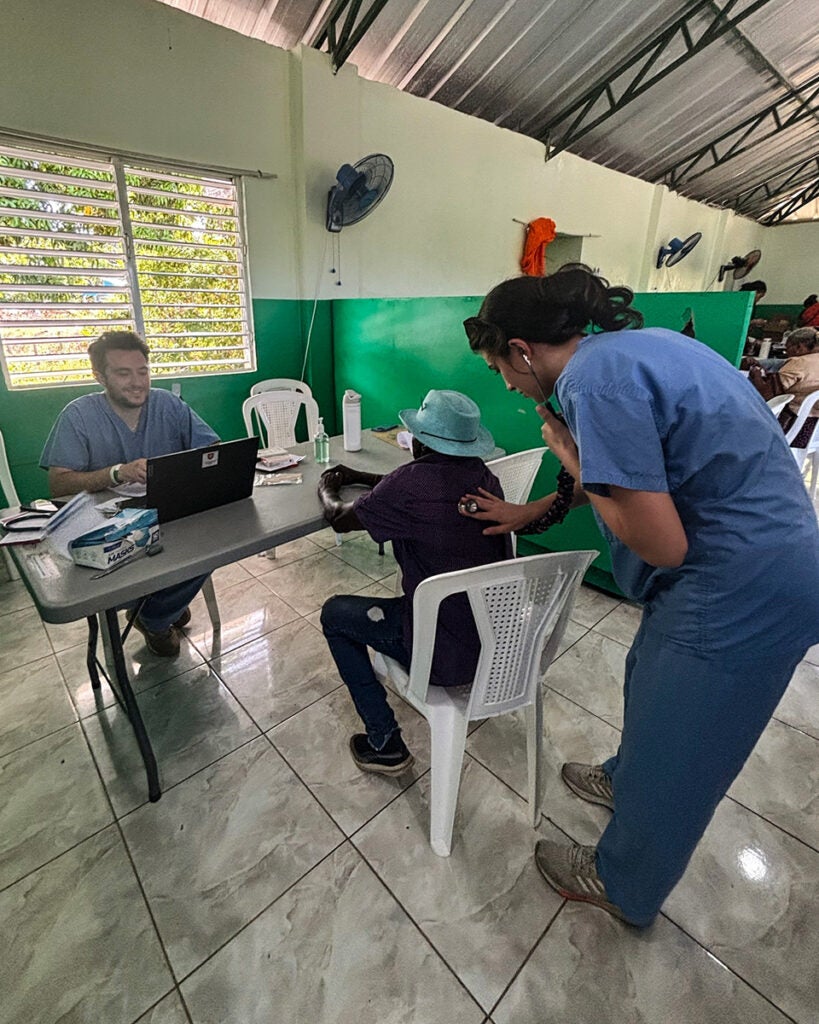
Ryan Tino (M’29) (seated) assisted during an exam.
Ryan Tino (M’29) recalled seeing a young Haitian woman who had to weigh medical recommendations with concerns for her own deportation. “We recommended she go to the hospital for more testing, and she understood,” said Tino. “But she was afraid that if she went, she could be deported. That’s something most of us don’t have to think about when we recommend seeking medical care in the United States.”
For Orellana, one house visit became the defining moment of the trip.
She met a former firefighter in his 40s who was living with advanced heart failure. Despite obvious signs of severe illness, including profound swelling and difficulty breathing, his family did not realize how critically sick he had become.
“The physicians explained that he needed to be in the hospital immediately,” Orellana said. “It reminded me how medicine isn’t just about making the right diagnosis; it’s about understanding the barriers your patients face and meeting them where they are.”
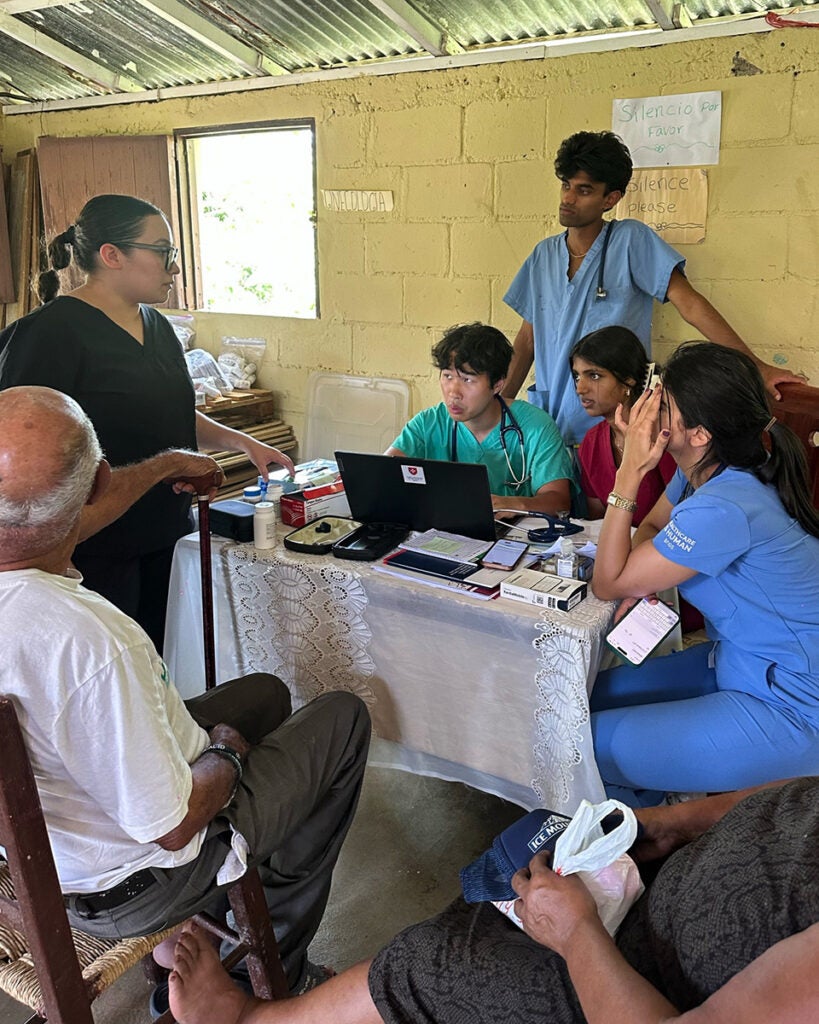
Exams with the medical students could be one of a handful of times patients received care in their lifetimes.
Other encounters challenged students’ assumptions about hardship and resilience.
In one Haitian settlement built beside a landfill, students spoke with residents who earned a living collecting scrap metal from burning trash. Despite difficult living conditions, many described feeling safer than they had in Haiti.
“The resilience was incredible,” Cheong said. “It completely changed the way I think about gratitude and about understanding patients’ circumstances before making assumptions.”
Medicine Across Cultures
Students lived with members of the community while they traveled throughout the Dominican Republic setting up local clinics.
“We’d meet our host family when we arrived, and then the next morning, they’d be our first patients,” said Tino. “It didn’t really feel like a typical doctor-patient relationship. We were living with people, eating meals with them, and then caring for them in the clinic. That gave me an appreciation for the people we were serving as a part of the community.”
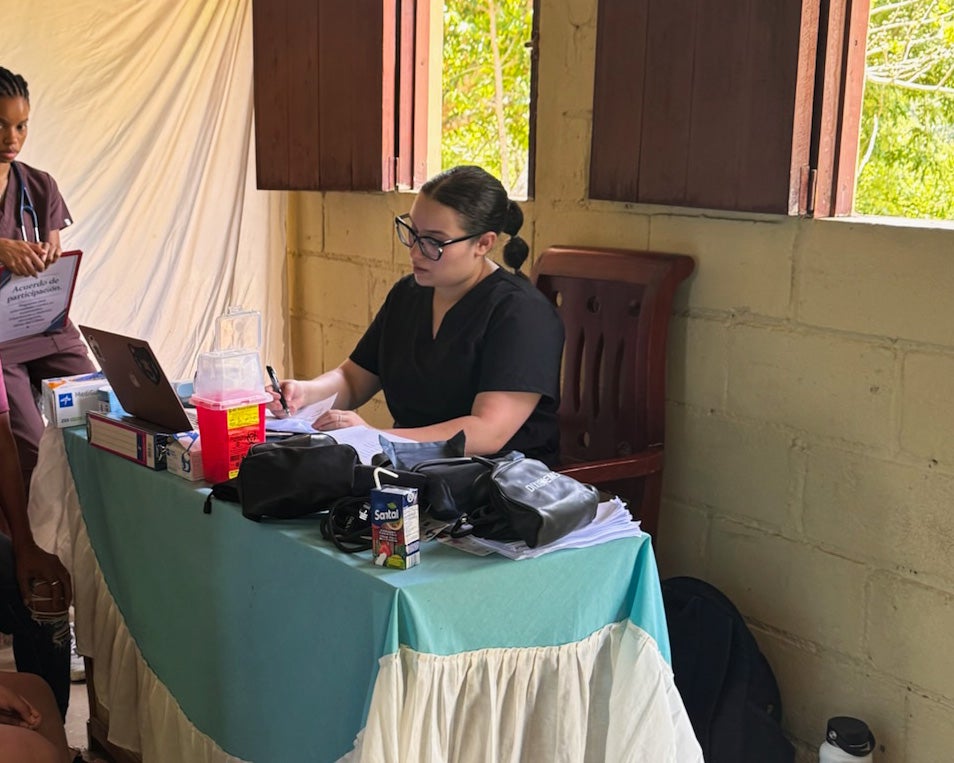
Orellana took the opportunity to connect with the patients she saw.
For bilingual students like Orellana, the experience became an opportunity to connect deeply with patients while helping classmates communicate across language barriers.
“I wanted my classmates to have their own relationships with patients,” she said. “If someone needed help, I’d step in. But I wanted the patient to keep eye contact with the student who was caring for them.”
Technology also became an unexpected clinical tool. When caring for Haitian Creole-speaking patients, students used satellite internet and translation software to bridge communication gaps, allowing them to conduct patient interviews that otherwise would have been impossible.
A Different Kind of Summer
For many medical students, the summer after first year is often devoted to research. Several participants acknowledged that choosing Mission ILAC meant taking a different path.
“People sometimes think the first summer of medical school should be spent doing research, and that’s valuable,” said Tino. “But this experience made me a better future physician. I came back with stronger clinical skills and a much better understanding of where patients are coming from.”
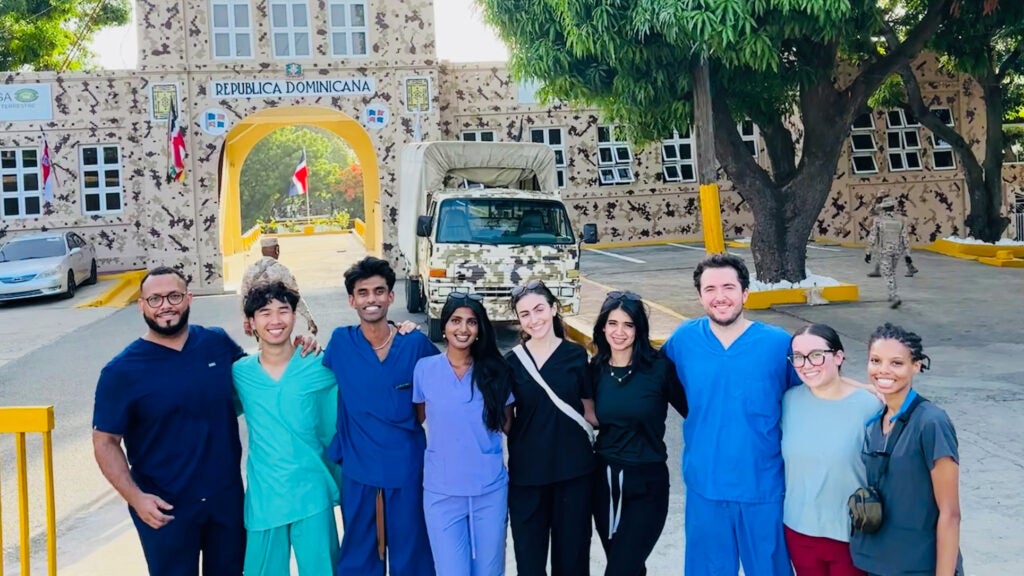
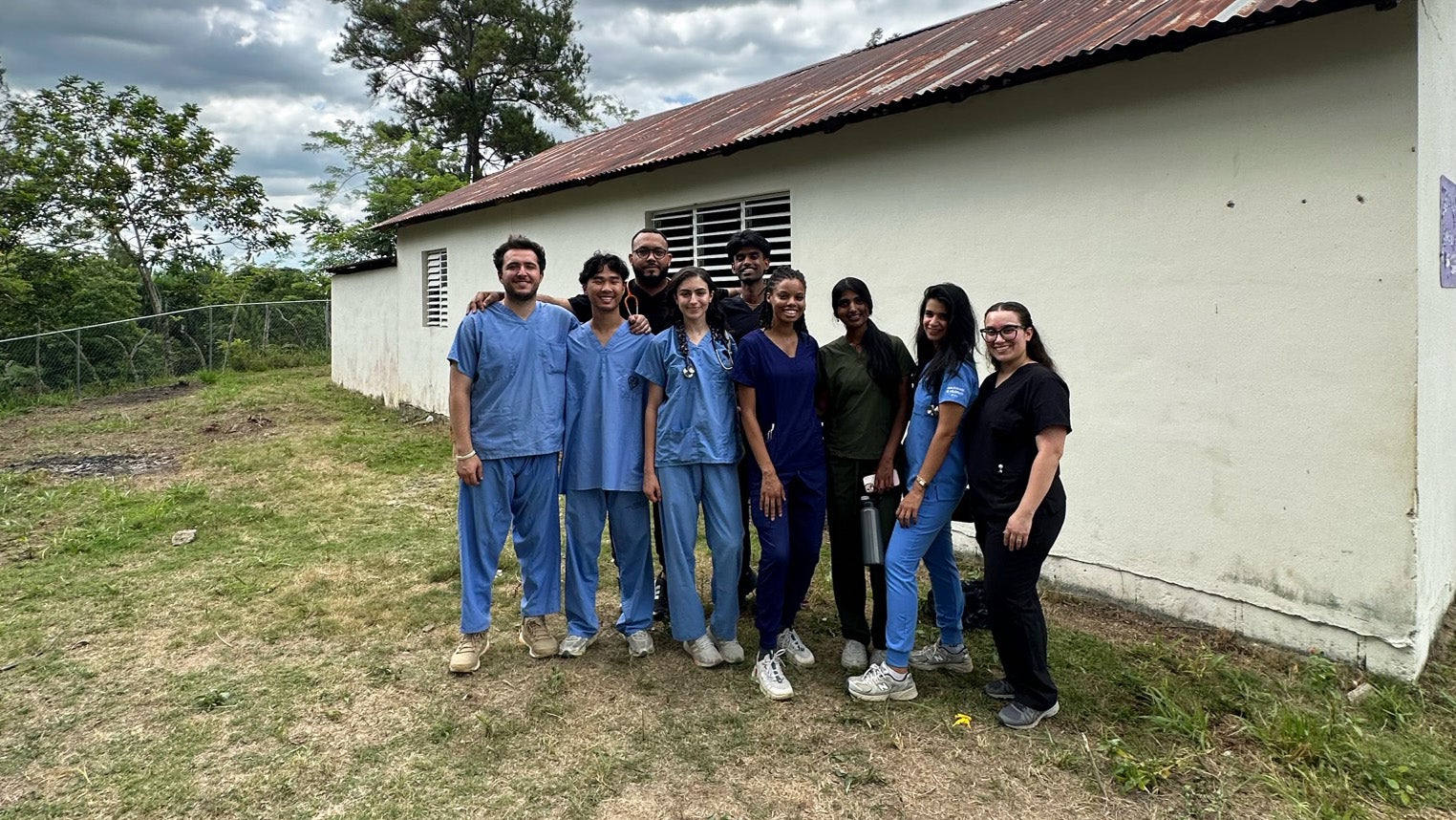
The friendships the students formed with each other through shared challenges became one of the program’s most unexpected rewards. (They are pictured here with Huascar Rodríguez, MD, of Mission ILAC, at far left)
The students agreed that while the days were long and physically demanding, the friendships formed through shared challenges became one of the program’s most unexpected rewards.
“I loved this experience,” said Orellana. “It was so rewarding to live with people and learn about their beautiful culture while also being pushed out of my comfort zone with my classmates as we worked long hours together in clinics taking care of patients.”
“I would tell any medical student to do something like this,” Cheong said. “It was the most transformative experience I’ve had so far. You can study medicine, but until you’re there, caring for patients and living in the community, you don’t fully understand what it means.”
Heather Wilpone-Welborn
GUMC Communications