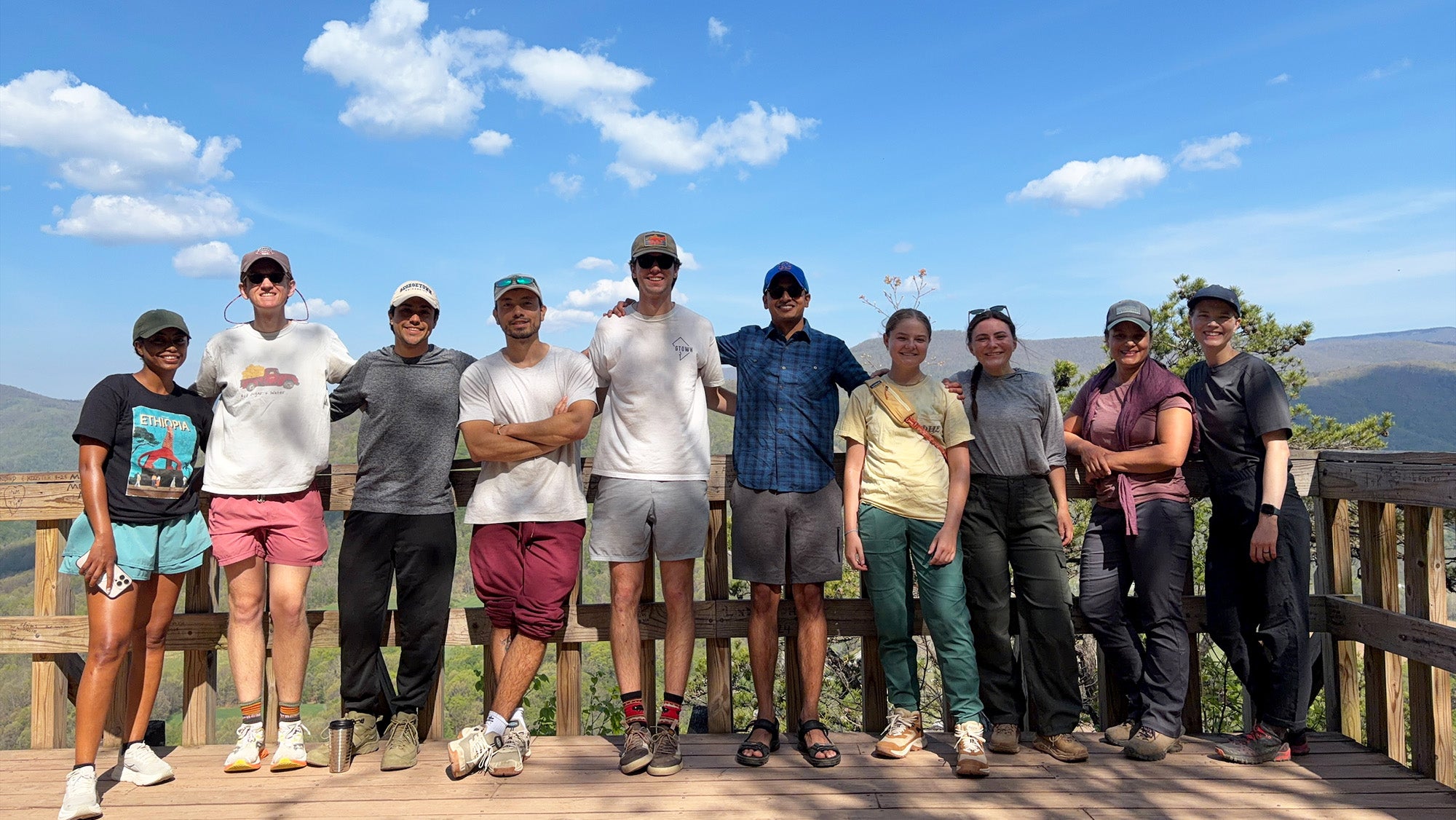
Wilderness Medicine Course Challenges Students to Think Beyond Traditional Healthcare Settings
(June 25, 2026) — As graduation approaches, many fourth-year medical students are preparing for residency by refining the clinical skills they’ll use in hospitals and clinics. But in the School of Medicine’s Wilderness Medicine elective, students spend two weeks learning what to do when there is no hospital.
The two-week elective introduces students to the principles of wilderness medicine: caring for patients in austere environments where help, equipment, and transportation may be hours away. Students practice evacuating injured hikers from remote trails, managing medical emergencies with limited supplies, navigating moving water during rescue scenarios and treating conditions ranging from altitude illness to snakebites.
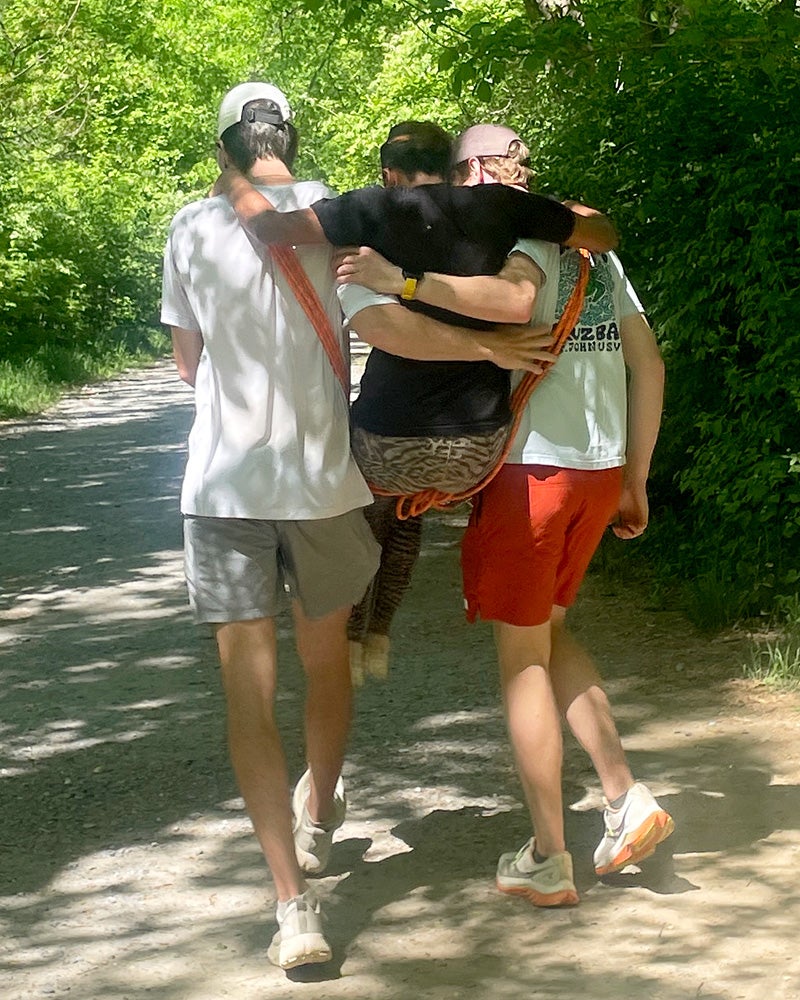
Throughout the course, students study a range of topics, including wilderness evacuation techniques.
“The best way to define wilderness medicine is practicing medicine in austere environments,” said Maria Lawrynowicz, MD, CRSP (M’18), assistant professor of emergency medicine, who co-directs the course with Chloe McCoy, MD, PhD, FAWM, assistant professor of emergency medicine. “You have limited resources, limited help and limited supplies. You have to use creativity and adapt your medical knowledge to whatever environment you’re in.”
McCoy agreed: “The skills students learn here aren’t separate from clinical medicine, they’re the foundation of it. When you can manage a critically ill patient in a field with no backup, you become a better physician everywhere else too.”
Throughout the course, students study topics ranging from altitude emergencies, hypothermia and heat illness to drowning, disaster triage, hunting and fishing injuries, and in-flight medical emergencies. They also hear from nationally recognized experts in toxicology, aerospace medicine, hyperbarics and emergency preparedness.
“People often think wilderness medicine means climbing Mount Everest or treating altitude sickness,” Lawrynowicz said. “But really, it’s practicing medicine anywhere you don’t have all the resources you need. If you’re on an airplane and someone has a medical emergency, that’s an austere environment. If you’re in a disaster zone or a resource-limited clinic, that’s wilderness medicine too.”
Learning Through (Outdoor) Experience
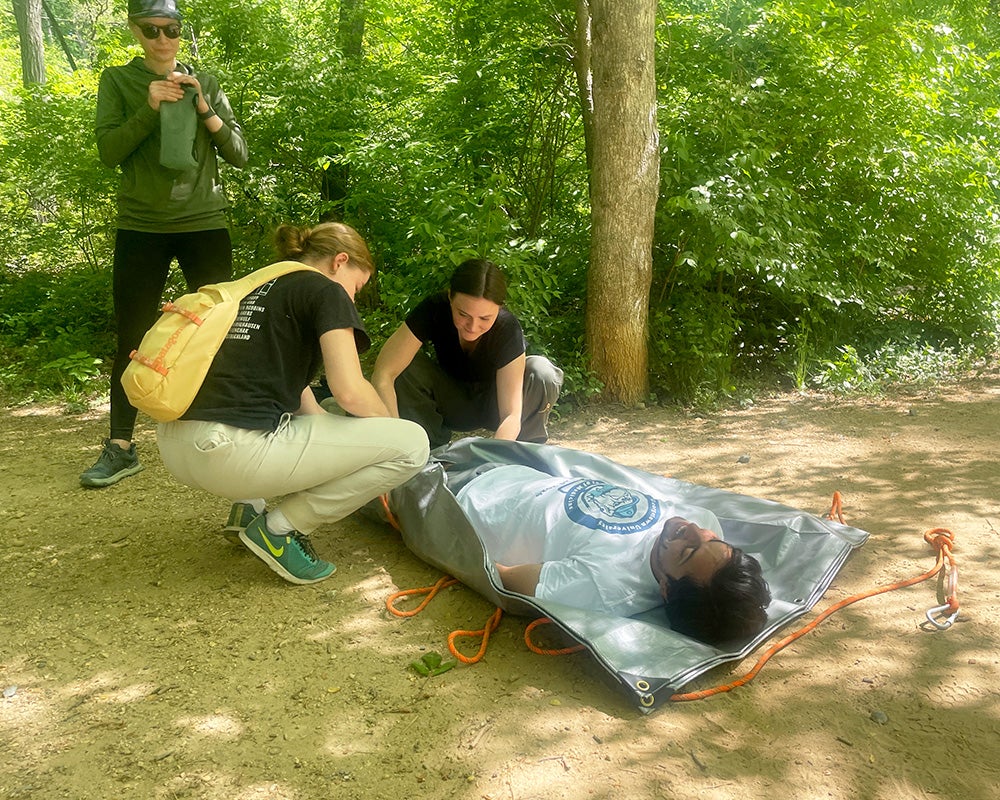
Constructing an improvised stretcher.
While lectures provide the scientific foundation, much of the course takes place outside the classroom.
One of the first in-person experiences is a hike along the Billy Goat Trail near Great Falls, where students practice wilderness evacuation techniques, including constructing an improvised stretcher using materials available in the field.
“If somebody gets injured miles from help, you can’t just call a rapid response team,” Lawrynowicz said. “Students have to think through how they’re actually going to get that patient to safety.”
For Pranay Chaurasia (M’26), who plans to pursue psychiatry, the course offered lessons that extend well beyond emergency medicine. “I think that regardless of specialty choice — in my case psychiatry — we are physicians first, and learning how to stabilize and treat people outside of the hospital is a useful skill to have at least some training in,” Chaurasia said. “Specifically to my psychiatry training, I wanted to learn how people and teams mentally and emotionally respond to emergencies in austere environments, because even if you are physically prepared and have all the right equipment, you can still fail to be rescued or survive hardship if you don’t have the right mindset,” he said.
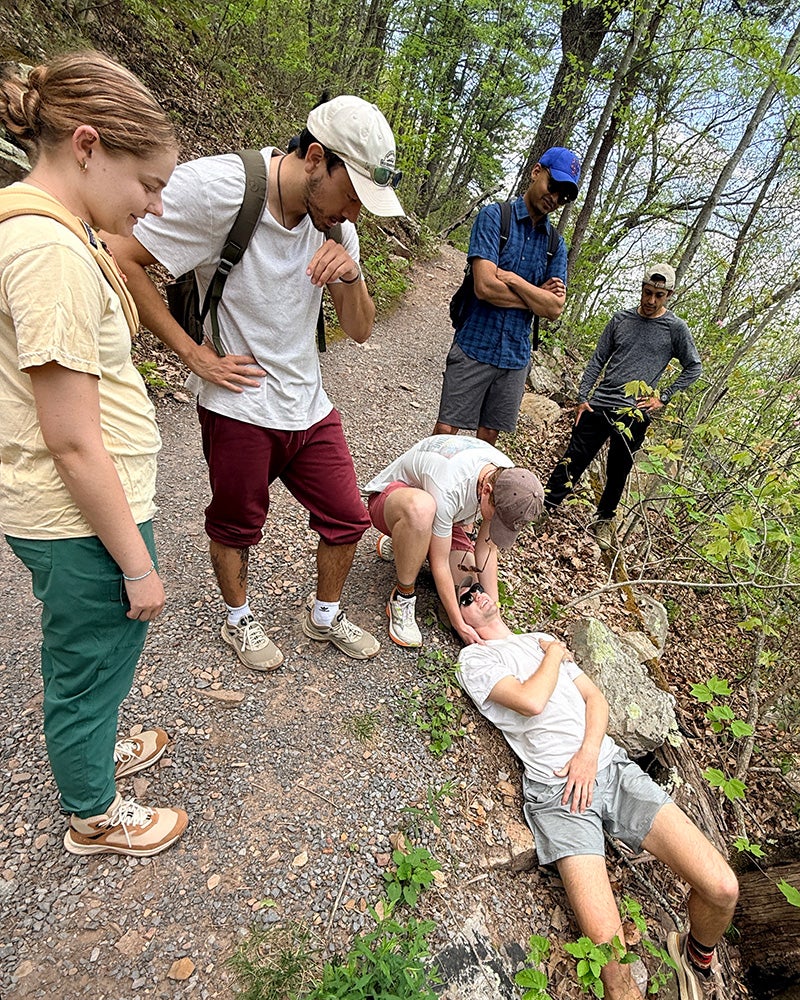
Working through a “sleeper scenario”
The course’s most unique teaching tool may be its “sleeper scenarios.” At the beginning of the elective, each student receives a simulated medical case and instructions to secretly introduce it during a hike or camping trip.
“We tell students to memorize the scenario and surprise everybody,” Lawrynowicz said. “One moment you’re hiking and the next somebody develops symptoms of anaphylaxis. The group has to stop, assess the patient and work through the situation together.”
Matthew Lynberg (M’26) said the sleeper scenarios were among his favorite parts of the elective. “Nobody knew when they were coming,” he said. “We had these scripts that could be deployed whenever you thought it made sense. During one activity, somebody suddenly became a snakebite victim. For 20 or 30 seconds, you think it’s real before realizing it’s a scenario.”
He also enjoyed the course’s daylong whitewater safety and rescue training on the Potomac River, led by professional instructors from Calleva Outdoors.
“I think my favorite day was the swift-water rescue day,” Lynberg said. “We learned rescue techniques, how to work as a team, how to navigate moving water and how to get to an incapacitated patient. We spent the whole day on the water in beautiful weather.”
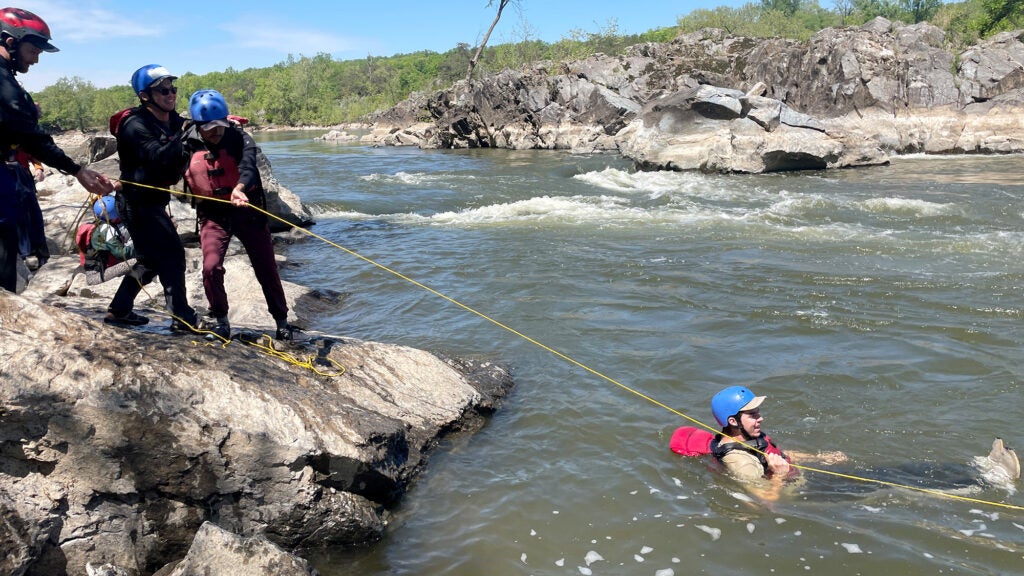
Whitewater safety and rescue training on the Potomac River
Exploring Unexpected Career Paths and Making Memories With Classmates
The lecture series introduces students to corners of medicine they may never encounter during traditional training. One session focuses on aerospace medicine and is taught by Peter Alexandrov, MD (M’14), director of space medicine at University of Florida.
“One of our most popular lectures is on space medicine,” McCoy said. “Students are always excited to learn about how medicine intersects with space travel and how what they have learned about wilderness medicine applies to this field.”
The course also draws on expertise from across emergency medicine, including disaster preparedness specialists, toxicologists, sports medicine physicians and wilderness medicine experts.
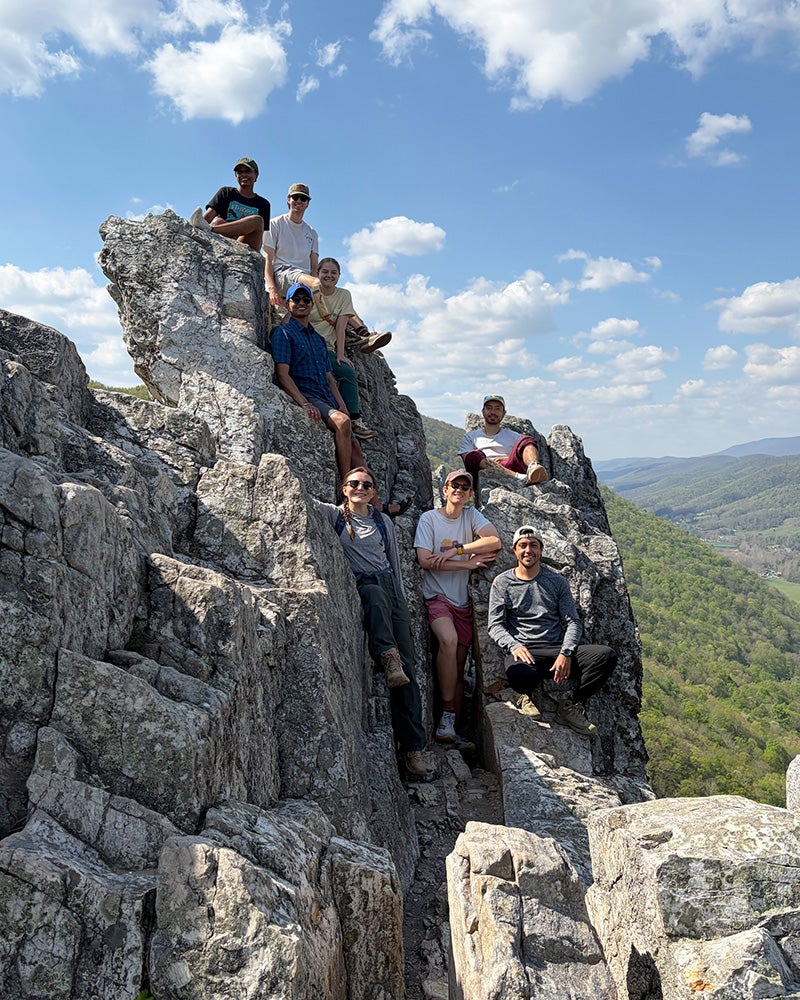
Rock climbing at Seneca Rocks, West Virginia
The course concludes with an overnight camping and rock-climbing trip to Seneca Rocks, West Virginia. Guided by professional climbing instructors, students spend a day learning climbing techniques before gathering around a campfire to deliver capstone presentations on toxic plants and animals.
The outdoor setting also creates opportunities for students to connect with classmates before dispersing to residency programs across the country. “The best part of the course was getting to know my classmates more deeply and having fun with them,” Chaurasia said.
“Medical school doesn’t give you many moments to just breathe.” McCoy said. “Sitting around a campfire with your classmates without the noise of the hospital, there’s something genuinely restorative about learning in a place where the pressure is different. Students are still thinking hard, still engaged, but the weight shifts, and you can see it.”
Preparing Doctors for Any Environment
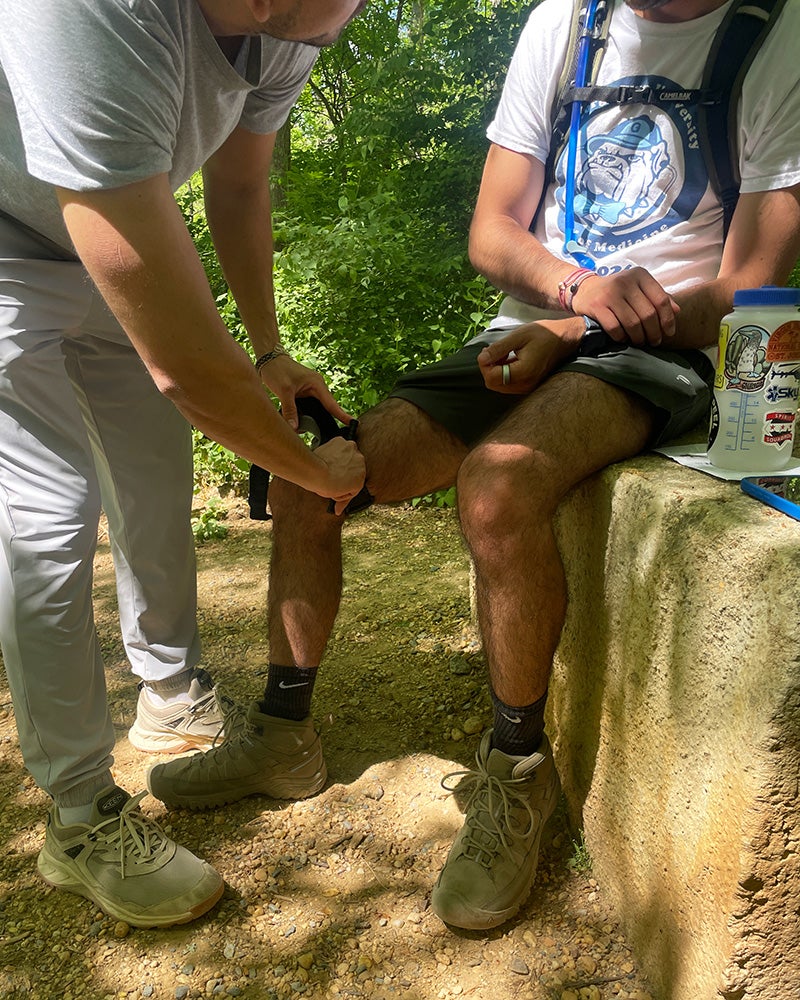
“At the end of the day, you’re a doctor wherever you are,” said course co-director Chloe McCoy, MD, PhD, FAWM.
The elective ends with an open-book collaborative final examination, but McCoy and Lawrynowicz say the course’s most important lessons are difficult to measure on a test. “At the end of the day, you’re a doctor wherever you are,” McCoy said. “Whether you’re in an operating room, on an airplane, in the woods or responding to a disaster, your job is to adapt and respond when help is needed.”
For Lawrynowicz, the course serves as a reminder that medicine is about much more than protocols and technology. “The environment may change, the resources may change, but your responsibility to care for people remains the same.”
For students like Chaurasia, the experience leaves a lasting impression. “I would absolutely recommend doing this rotation,” he said. “It was one of my most memorable moments of medical school, so if your schedule allows, go sign up!”
Heather Wilpone-Welborn
GUMC Communications